
How I Got Into Golf — Stockwood Park, a Sunny Sunday, and a Game That Never Let Go
By Jabunong – Golf Passport UK
Before I ever set foot on a golf course, I made my own clubs out of boundary wire.
I was a kid growing up at Chikurubi Police Camp in Harare, Zimbabwe. My father was a policeman. There was no golf course nearby, no equipment to borrow, and absolutely no reason a boy from a police camp should have been fascinated by a sport played in blazers on immaculate fairways. But I was. I’d watch golf on television — the silence before a shot, the precision, the drama — and I wanted to feel what that was like.
So I improvised. I bent boundary wire into club shapes. I used the ball from a deodorant roll-on as a golf ball. The scrubland at the back of the camp was my course. That was my introduction to the game — long before I ever held a real club.
There was a policeman at the camp named Mr Mandaza — a professional golfer — and we used to stop whatever we were doing whenever he was hitting balls. We’d just watch. There was also Nick Price, Zimbabwe’s greatest golfer, who was all over the news in the early 1990s when I was in high school, winning majors and carrying Zimbabwe’s name to the biggest stages in sport. For a young boy from Harare, that mattered. It made the game feel like something that could be mine one day, even if it still felt a long way off.
– September 2004 – The Round That Started Everything.
I came to the UK in 2002. In my third year here, everything changed on a sunny Sunday morning in Luton.
My father-in-law George — Sekuru, as we call him in our family — suggested we go out for a round at Stockwood Park Golf Course. My brother-in-law Mutsa was visiting from South Africa. Sekuru had a set of clubs but played only occasionally. None of us were golfers in any serious sense. We were just three men on a sunny afternoon, going to see what this game was actually about up close.
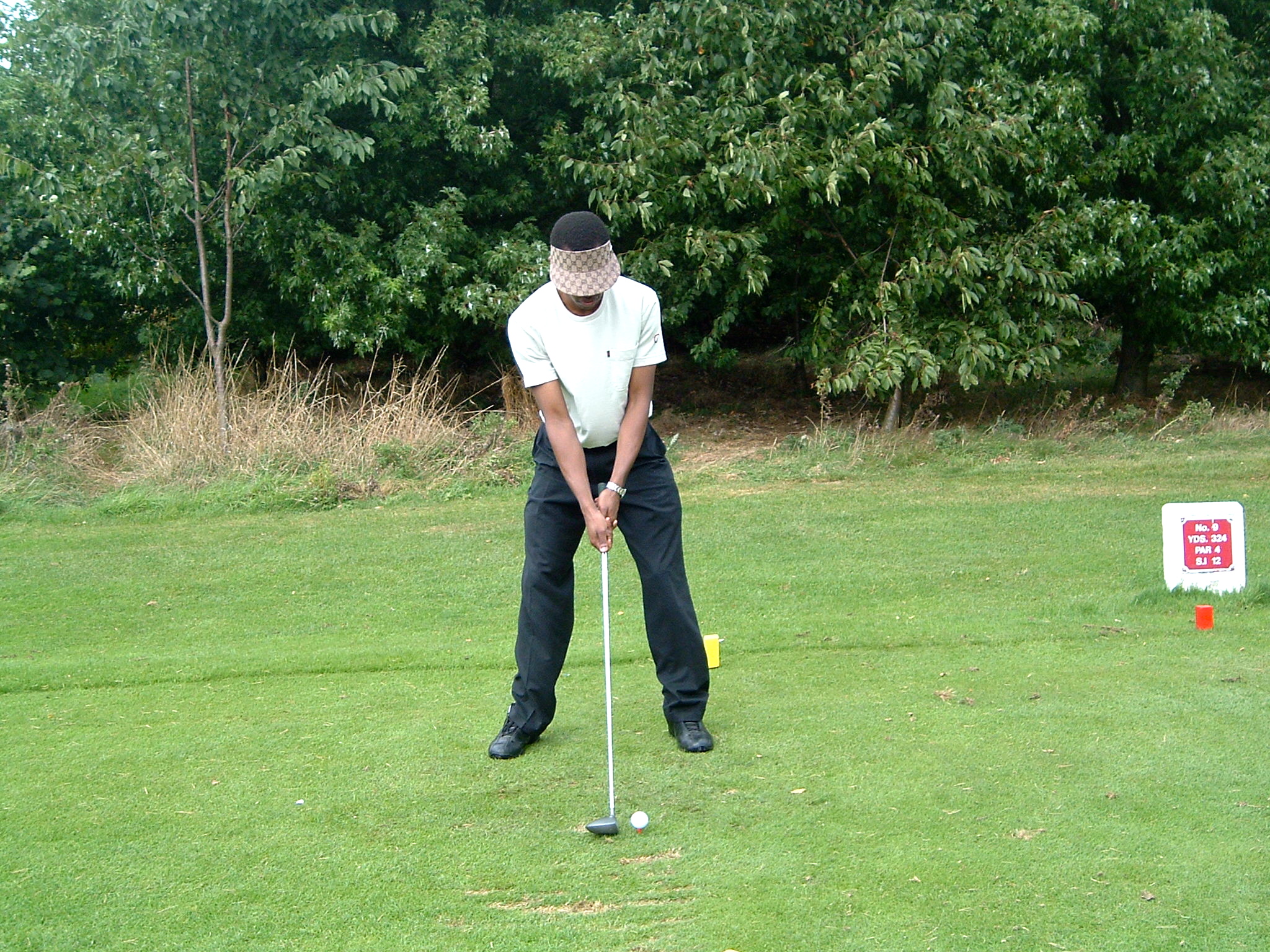
Stockwood Park sits in 120 acres of established parkland just minutes from Luton town centre — an 18-hole par 69 course with tree-lined fairways, good greens, and a layout designed to test accuracy without being cruel to beginners. For a first round of golf, there are worse places to start.
I had been watching Tiger Woods for a few years by this point. He was at the absolute peak of his powers — the most dominant athlete in any sport, rewriting what golf looked like and who it belonged to. Here was a Black man at the top of a sport that had always looked a certain way. As a 25-year-old Black African man new to the UK, seeing that wasn’t just inspiring. It was permission. It was a sign that the game I’d been fascinated by since I was bending wire in Zimbabwe had a place for someone like me.
I missed nearly every tee shot that day. Shanked it, duffed it, topped it, sent it sideways. I made a complete mess of myself across 18 holes. I left the course completely and utterly hooked.
Not on the success — I’d had none of that. On the challenge.
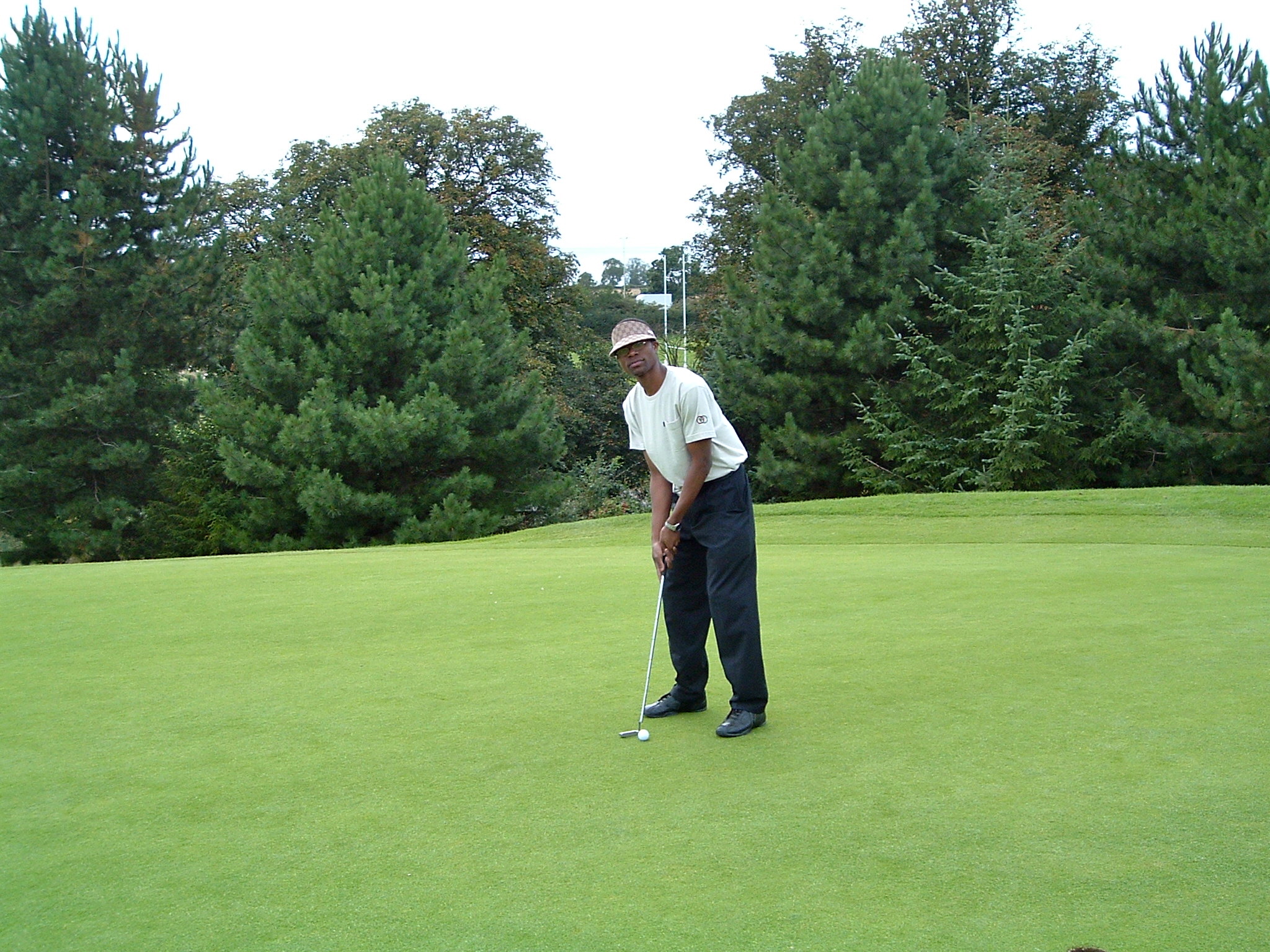
– The Rule I Made Myself
I went home and did what any sensible person does when they discover a new obsession — I went on eBay and bought a starter pack of clubs.
I can’t recall the brand now, but I remember exactly the rule I set myself when those clubs arrived: I would not set foot on the main course until I could make clean contact with the ball.
That meant three months of nothing but the driving range and the par-3 course at Stockwood Park. Not 18 holes. Not even 9. Just the range and the short course, over and over, until I could feel what proper club-to-ball contact was meant to feel like. The first time I hit a shot cleanly — that crisp, connected strike that you can feel through your hands before you even look up — I understood why people spent their whole lives chasing this game.
By the time I walked onto the main course properly, I could at least hit the ball. Not far. Not straight. But hit it. That felt like enough to begin.
– Building the MacGregor Set — Six Months, One Club at a Time
As I started playing on the main course, something shifted in me. I didn’t just want to play golf. I wanted to look like I played golf. I wanted the proper kit, the right bag, the clubs that said I took this seriously.
I fell in love with MacGregor clubs.
I couldn’t afford to buy a full set in one go — so I built it piece by piece, the way you build anything when budget is the constraint. First, the MacGregor V-Foil irons and wedges. Then, a few months later, the MacGregor Tour Staff bag — green and white, and I was enormously proud of it. Then the MacGregor V-Foil driver and fairway woods. And finally, the putter to complete the set.
Six months from that first purchase to a complete bag. Every club chosen deliberately, every addition felt like progress. When the set was finally complete, I had something that was entirely mine — built slowly, paid for properly, and carrying the weight of everything I’d taught myself in those months on the range.
I gave that MacGregor set to my brother-in-law eventually. It had done its job.
The 2005 Masters — When Tiger Changed Everything Again
In April 2005, I watched Tiger Woods win the Masters in a playoff. His chip-in on the 16th hole — the ball rolling toward the cup, hanging on the lip for what felt like forever before dropping — is one of those sporting moments you remember exactly where you were when you saw it.
That Masters didn’t just inspire me. It rewired how I thought about the game, and about my equipment.
Tiger played Nike. And from that point forward, so did I.
This wasn’t a casual preference. This was a commitment. I switched my clothing, my footwear, everything Nike. I still can’t bring myself to wear Adidas — not trainers, not clothing — to this day. The brand loyalty Tiger inspired in me runs that deep. (Eyewear is the one exception. Even I have limits.)
My strategy for building the Nike set was the same as the MacGregor set — one club at a time, built slowly, each piece chosen deliberately. But this time I added a rule: I wouldn’t use the set on the course until every club had been bought. The full set had to be complete before it played a single round.
I gave myself a year.
It started with the Nike Tour Staff bag — the foundation, the statement of intent. That bag is still with me today. Then came the Nike VR irons, followed by the Nike VR Driver — the best driver I have ever hit. The ball came off the face like nothing I’d experienced before. Then the VR wedge set, the fairway woods (3, 5 and 7), and finally the Nike blade putter, just like Tiger played.
By 2008, the set was complete. I played that Nike bag until 2022. Fourteen years.
The only dark chapter in that story is the driver. The VR Driver was stolen a few years after I bought it. I was gutted in a way that probably seems excessive to someone who’s never found a club that genuinely fits their game — but when you find the right driver, you know it. I never found one that felt quite the same again.
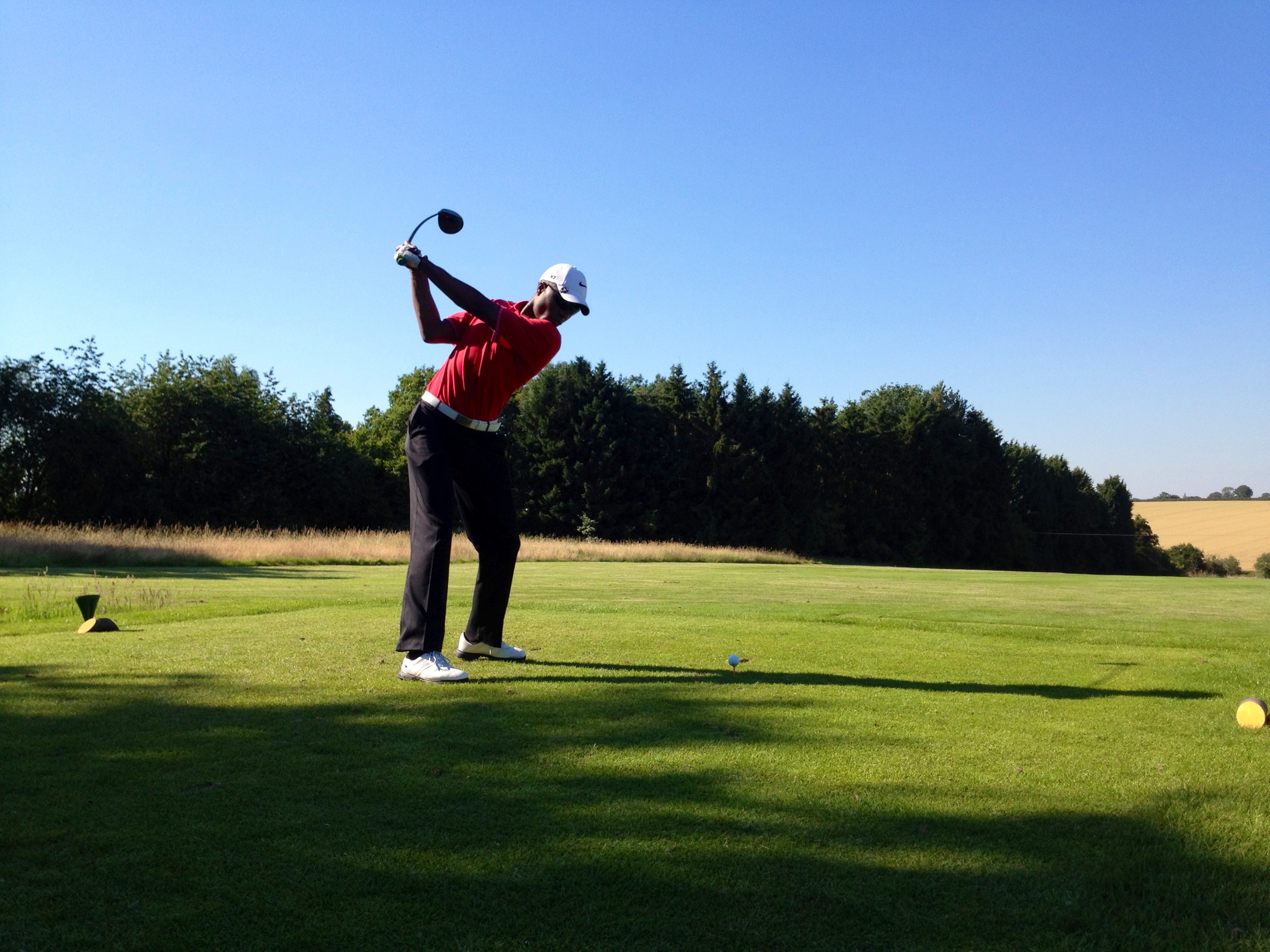
The TaylorMade Years — Following Tiger Again
In 2016, Nike announced they were leaving the golf equipment business. Tiger moved to TaylorMade.
I watched, waited, and followed.
In 2019 I built a TaylorMade Rocket Bladez full set. Same method — piece by piece, deliberately. But I never fell in love with that set the way I had with the Nike clubs. The irons never felt quite right. The relationship didn’t click the way it had before. I eventually sold the Rocket Bladez to a friend who was just starting the game. They’re better off with it than I was.
The Current Bag — The One I Actually Adore
The set I play now is the best I’ve owned since the Nike VR. I built it the same way I’ve built every set — starting with the bag, adding one piece at a time, using it only when it was complete.
Here’s exactly what’s in it:
The Bag — TaylorMade Tour Staff Bag The foundation. The same approach as always — start with the bag that says you mean it.
Driver — TaylorMade M6 The one misbehaving club in the set. The M6 is a brilliant driver on its day — forgiving, fast, long. But it’s the club that costs me shots when it decides not to cooperate. I’m still working on our relationship.
Fairway Woods — TaylorMade M6 3-Wood, TaylorMade M5 5-Wood Both clubs I trust. The M6 3-wood off the tee when the driver isn’t cooperating has saved more rounds than I can count.
Hybrid — TaylorMade M6 3-Hybrid One of the best additions I’ve made to any bag. Versatile, reliable, and useful from more lies than I expected.
Irons — TaylorMade P770 (4-iron to PW) The heart of the set and the clubs I’m most proud of. The P770s are a players’ iron — not the most forgiving on the market, but when you strike them well, they reward you with a ball flight that’s genuinely satisfying. These irons made me work harder on my ball striking, and the game improved for it.
Wedges — MG3 50°, 52°, 54°, 56°, 58°, 60° Six wedges. Yes, six. The short game is where rounds are made or lost for the 10+ handicapper, and having a wedge for every distance and situation around the green has changed how I approach the scoring holes. I play 3 at a time, either 50°, 54°, 58° or 52°, 56°, 60°
Putter — TaylorMade Spider X7 Tour The flatstick. On the greens it feels exactly right — stable, consistent, and a putter that gives you confidence from 10 feet in a way that doesn’t happen with every putter you pick up.
Ball — TaylorMade Tour Response A tour-level ball at a price that doesn’t make you wince when you find water. For the 10+ handicapper who wants genuine performance without paying premium ball prices, the Tour Response is hard to beat.
The Carry Bag Added alongside the full set for the rounds when I want to go lighter. The Tour Staff bag goes out for the proper occasions. The carry bag for when it’s just me and the course.
The Trolley — Walking is Non-Negotiable
I bought a Stewart Golf Q-Follow trolley — a remote-controlled electric trolley that follows you around the course automatically. It’s the best golf technology purchase I’ve made outside of the clubs themselves.
I am not a fan of buggies. I never have been. Most of us who play golf in the 10+ handicap bracket spend our working weeks sitting in front of a screen. The golf course is one of the few places where you can walk several miles in fresh air, think clearly, and move your body properly. Taking a buggy removes that entirely. Walking is part of the game for me — not an optional extra.
My Q-Follow is currently out of action with battery issues, so I’m using a PowerKaddy push trolley in the meantime. It does the job. But I miss the Q-Follow. (If you’re in the market for a trolley and budget isn’t the main concern, the Stewart Q-Follow is the one.)
In winter, when conditions are wet and muddy, I’ll occasionally carry the bag rather than bring a trolley back caked in mud. I hate bringing mud into the house.
After Every Round — The Ritual
When I get home from a round, I clean every single club in the bag. Every iron, every wedge, the woods, the putter — all of it. The grooves, the face, the hosel. All clean before anything else.
My clubs don’t live in the garage. They have a place in the living room.
Some people find that excessive. For me it’s just respect for equipment that cost a lot, took time to build, and that I genuinely care about. If you look after your clubs, they look after your game.
What I’d Tell Someone Starting Out Today
Twenty-two years of buying, building, and occasionally getting it badly wrong has taught me a few things about golf equipment that nobody tells you when you start:
You don’t need the latest driver. Every year manufacturers release new clubs promising more distance, more forgiveness, more everything. For the golfer who plays 15–20 rounds a year, a new driver requires range time to bed in, and the gains are rarely as dramatic as the marketing suggests. If your current driver works, stay with it.
Start with used or budget clubs. If you’re brand new to the game, don’t spend £500 on a set before you know whether you’ll stick at it. A used set or an entry-level set is entirely sufficient to learn on. Save the investment for when the game has you.
Build your dream set over time. When new clubs are released, the previous year’s models drop in price significantly. Buying last year’s iron set at a discount is smarter than buying this year’s model at full price. The performance difference is marginal. The price difference is not.
Get custom-fitted when you’re ready. When you’ve played enough to understand your own swing tendencies — your ball flight, your typical miss, your swing speed — get your clubs fitted properly. The right shaft flex and lie angle for your swing makes more difference than the brand name on the head.
Buy a good putter and keep it. More shots are taken inside 100 yards than anywhere else. More rounds are lost on the green than on the tee. If you find a putter that works for you, don’t change it.
Where It All Began
I went back to Stockwood Park recently to walk the course and remember where it all started. The same parkland, the same tree-lined fairways, the same welcoming public course that let a 25-year-old with a borrowed enthusiasm and no idea what he was doing come and play.
The 10th hole — a par 3 of over 200 yards played through an avenue of trees to a tight green — is the same as it always was. So is the 14th, played from an elevated tee with a backdrop that makes you want to take the shot slowly and enjoy where you are.
I didn’t make great contact on that first round in 2004. I shanked it, topped it, missed it entirely more than once. But I left the course knowing I’d be back.
Twenty-two years later, I’m still back. The boundary wire club from Chikurubi Police Camp is a long way behind me. The Nike VR Driver that was stolen still stings a little. The P770s are in the living room, cleaned and ready.
And the game still has me completely.
⛳ Book This Course
If you’re looking for a course with that same mix of accessibility and character that got me hooked at Stockwood Park, search and compare tee times through Golf Passport UK → — public pay-and-play courses, twilight deals and visitor green fees all in one place.
Jabunong — Golf Passport UK Started at Stockwood Park, September 2004. Still chasing the perfect round.
You might also like: